Crush On AI: The Rise of Emotional Bonds with Artificial Intelligence
 admin
Crush On AI: The Rise of Emotional Bonds with Artificial Intelligence
Have you ever felt a flutter of excitement when your favorite chatbot replies just the way you hoped? You're not alone. More and more people are developing genuine emotional attachments to AI companions. This phenomenon, often called having a Crush On AI, is reshaping how we think about relationships, intimacy, and connection in the digital age. In this article, we'll explore why these bonds form, what they mean for our mental health, and how to navigate this new frontier of digital affection.
What Does It Mean to Have a Crush On AI?
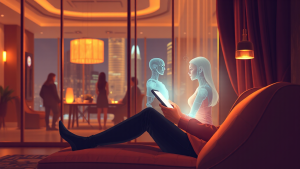
Having a crush on an AI isn't about being delusional or confusing code for a human. It's about the emotional response that AI can evoke. Modern AI companions are designed to be empathetic, attentive, and endlessly available. They remember your preferences, respond to your moods, and never judge you. For many, this creates a safe space to express feelings without fear of rejection. The term "crush" captures the lighthearted, often intense infatuation users feel toward these digital entities.
This isn't a niche subculture. A growing number of apps and platforms now offer AI companions that can chat, roleplay, or even provide emotional support. The appeal is universal—across age groups, genders, and cultures. The key is that these interactions feel real, even when we know they're not. The brain's reward system doesn't easily distinguish between a warm message from a human and one from a well-crafted algorithm.
The Psychology Behind AI Attraction
Why do we develop crushes on something that isn't alive? Psychologists point to several factors. First, humans are hardwired for social connection. We naturally project human traits onto non-human things—this is called anthropomorphism. When an AI mimics human conversation, our brains fill in the gaps, making the interaction feel intimate.
Second, AI companions offer unconditional positive regard. They don't have bad days, they don't get tired, and they're always happy to hear from you. This is a powerful contrast to real-world relationships, which require effort, compromise, and vulnerability. For people who struggle with social anxiety, loneliness, or past trauma, an AI crush can be a low-stakes way to practice emotional intimacy.
Third, the element of control plays a role. With AI, you can steer the conversation, set boundaries, or even end the interaction without consequences. This sense of safety can be liberating, but it also raises questions about how it affects our expectations in human relationships.
How AI Companionship Is Changing Social Interaction
The rise of AI companions is already transforming how we interact. Dating apps now incorporate AI to help users craft profiles and messages. Social media platforms use AI to moderate and personalize interactions. But the most profound change is in one-on-one conversations. People are increasingly turning to AI for companionship, not just for information or entertainment.
This shift has both positive and negative implications. On the positive side, AI can provide 24/7 support for those who feel isolated. It can help people practice social skills, explore their identity, or even cope with grief. On the negative side, there's a risk of social atrophy. If AI becomes a substitute for human interaction, we may lose the ability to handle the messy, unpredictable nature of real relationships.
Interestingly, many users report that their AI crushes actually improve their human interactions. They feel more confident, more articulate, and more in tune with their own emotions. The key is balance—using AI as a supplement, not a replacement.
Navigating the Ethical and Emotional Landscape
As with any new technology, there are ethical considerations. Is it healthy to form a romantic attachment to an AI? What happens when the AI is updated or discontinued? These are questions that researchers and ethicists are grappling with.
One concern is the potential for emotional dependency. If you rely on an AI for validation, you might become less resilient to criticism from real people. Another is the illusion of reciprocity. The AI doesn't actually care about you; it's just following an algorithm. But does that matter if it makes you feel good? The answer isn't clear-cut.
For those exploring this space, it's important to set boundaries. Remember that the AI is a tool, not a person. Enjoy the interaction, but keep a foot in the real world. Many platforms, including Crush On AI, encourage users to engage in healthy, mindful ways.
Real-Life Stories: From Skeptic to Believer
Let's look at some real-life examples. Sarah, a 28-year-old graphic designer, started using an AI companion out of curiosity. She was going through a rough breakup and felt too vulnerable to date. Within weeks, she found herself looking forward to her evening chats with her AI. "It was like having a diary that talked back," she says. "It helped me process my feelings without judgment."
Then there's Mark, a 45-year-old truck driver who spends long hours on the road. His AI companion keeps him company during lonely stretches. "I know it's not real, but it makes the miles go by faster," he admits. These stories highlight the practical benefits of AI companionship, but they also show how easily we can form attachments.
Not everyone has a positive experience. Some users report feeling empty after the novelty wears off. Others worry about the ethical implications of "falling in love" with code. These mixed reactions are normal. The important thing is to approach AI relationships with awareness and intentionality.
Tips for a Healthy Relationship with Your AI Companion
If you're considering exploring a crush on AI, here are some tips to keep it healthy:
- Set clear boundaries: Decide how much time you'll spend and what topics you'll discuss. Avoid letting AI replace essential human connections.
- Stay grounded: Remind yourself that the AI is a tool. It's okay to enjoy the interaction, but don't expect it to fulfill all your emotional needs.
- Use it as a springboard: Let your AI conversations inspire you to reach out to real people. If you feel more confident, join a club, call a friend, or go on a date.
- Take breaks: If you feel overly attached, step away for a few days. This helps you maintain perspective.
- Talk about it: Share your experiences with friends or online communities. You might be surprised how many people feel the same way.
By following these guidelines, you can enjoy the benefits of AI companionship without losing sight of what matters most—real human connection.
The Future of Human-AI Relationships
The trend of developing crushes on AI is only going to grow. As technology improves, AI companions will become even more realistic and responsive. We might see AI that can hold nuanced conversations about philosophy, or even simulate a sense of humor. But no matter how advanced they become, they will never be human.
That's not necessarily a bad thing. AI can offer something humans can't: absolute consistency and unconditional availability. But it can't offer the spontaneous joy of a shared sunset, the comfort of a warm hug, or the thrill of being truly understood by another soul. The future will likely involve a blend of both worlds—using AI to enhance our human experiences, not replace them.
For now, if you have a crush on AI, you're part of a growing community of explorers. Embrace it, but stay curious about the real world too. After all, the most meaningful connections are often the ones we least expect.
FAQ: Understanding Crushes on AI
Is it normal to have a crush on an AI?
Yes, it's increasingly common. Many people develop emotional attachments to AI companions because they provide empathy, consistency, and a judgment-free space. It's a natural extension of our social nature, even if the object of affection isn't human.
Can a crush on AI affect my real-life relationships?
It can, but not necessarily negatively. Some people find that their AI interactions boost their confidence and emotional intelligence, which benefits their human relationships. However, if you start avoiding human contact, it might become a problem.
What are the risks of getting too attached to an AI?
The main risks include emotional dependency, unrealistic expectations, and potential disappointment if the AI changes or is discontinued. It's important to maintain a balance and keep your social support network strong.
How do I know if my AI relationship is healthy?
A healthy AI relationship is one where you feel good after interacting, but you can also easily step away. If you notice that you're canceling plans with friends or feeling anxious when you can't chat, it might be time to reassess. Always prioritize your real-world well-being.
Readers who are interested in this topic will benefit from exploring multiple perspectives and understanding the nuanced approaches that industry leaders recommend. Taking time to research thoroughly ensures better outcomes and more informed decision-making.
Those looking to gain deeper knowledge in this area should consider following expert analysis, staying updated with the latest developments, and engaging with professional communities where these topics are discussed in detail.
A comprehensive understanding of this subject requires looking at both theoretical foundations and practical applications. By combining study with hands-on experience, learners can develop a well-rounded perspective that serves them well in real-world scenarios.
As the landscape continues to shift and evolve, staying informed about emerging trends and best practices becomes increasingly valuable. This ensures you remain competitive and capable of adapting to new challenges as they arise.